BOFIT Weekly Review 42/2026
India tightens its monetary stance
On October 7, the Reserve Bank of India (RBI) raised its benchmark repo rate by 25 basis points to 5.5 %. It was the central bank’s the first monetary tightening since 2023. During that period, the repo rate declined slowly from a peak of 6.5 %. The Monetary Policy Committee (MPC), which is responsible for interest-rate setting, has signalled that the era of accommodative monetary policy is over and that interest rates will either remain unchanged or raised further in coming months.
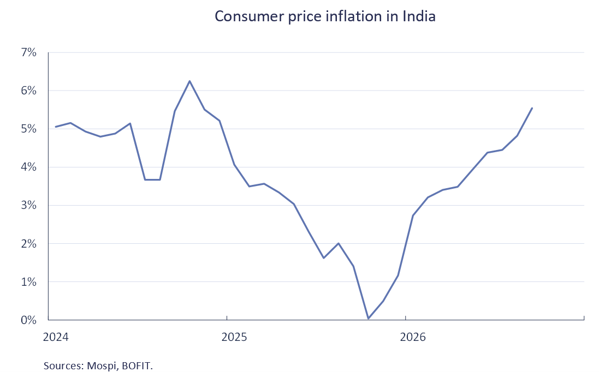
The tightening of monetary policy reflects the rise in inflationary pressures in a context of fairly robust economic growth. Consumer price inflation has accelerated rapidly in India in recent months (see chart), already approaching the upper bound of the central bank’s 6 % inflation target band. The rapid rise in consumer prices in recent months largely reflects higher global commodity prices, including oil, due to the ongoing conflicts in the Middle East. By raising the repo rate and signalling a shift to a tighter monetary stance, the MPC hopes to anchor inflation expectations and curb domestic price pressures.
In any case, the Indian economy is showing signs of slowing growth. The latest reading of the Purchasing Managers' Index (PMI) for manufacturing and services industries of 55 points is down by five points from previous year, indicating a marked slowdown in economic growth. The slowdown is in line with expectations as last year’s sizzling 7.7 % GDP growth partly reflected tax cuts on goods and services. The RBI forecasts that economic growth will be 7.1 % during the current fiscal year (India’s fiscal year runs from April to March) and about the same in FY27. The RBI outlook comports well with the IMF forecast published this week.