BOFIT Weekly Review 40/2026
Presidential meeting yields no reset in US-China relations
Chinese president Xi Jinping’s state visit to the United States last week (Sept. 23–25), which appeared to be largely ceremonial, resulted in no substantial changes in relations between the two superpowers. Ahead of the presidents’ meeting, it was announced that the 12-month “ceasefire” in the trade war agreed last year would be extended to January 10, 2027. Unless otherwise agreed, measures including China’s tightened export restrictions on exports of rare earth elements (REEs) enter into force on that day. The presidents are expected to meet at two more occasions this year. President Donald Trump plans to travel China for the APEC summit in Shenzhen in mid-November, and Xi plans to return to the US to attend the G20 summit in Miami in mid-December.
In addition to the announcement of an agreement on keeping the trade war ceasefire in place, the parties released on September 26 an 8-point consensus, which includes a $30 billion reciprocal tariff reduction agreement on non-sensitive goods. The US reductions apply to Chinese imports of a wide range of household items from blankets and microwave ovens to footballs and Christmas lights. China committed to cutting tariffs on many US imports, including numerous agricultural products, bread, juice, seafood, cosmetics, ultrasound and magnetic resonance imaging equipment, and dental care equipment.
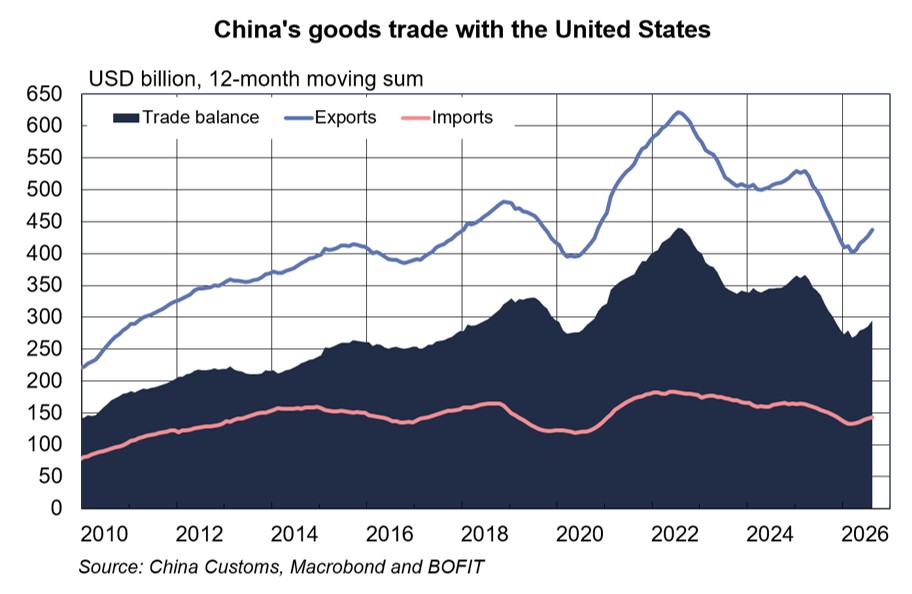
Relations between the US and China have grown even more tense during Trump’s second term. With escalation of the trade war in spring of 2025, direct trade between the two countries contracted rapidly. Chinese goods exports to the US have recovered somewhat this year (up 6 % y-o-y in value terms during the January-August period). The recovery in exports has been broad-based across many goods categories. China’s import flows from the US have also recovered this year (up 3 %). Overall import growth has been driven by the massive increase in the value of microchip imports. Imports in most other goods categories continued to decline.
International production chains make it difficult to assess the true level of trade between the two countries. Drastic changes in the tariff regimes of the two countries have compelled companies to modify their production chains in order to minimize tariff burdens. There is strong evidence suggesting that adjustments such as China’s increased trade with countries in Southeast Asia reflects efforts of firms to avoid high US tariffs.