BOFIT Weekly Review 25/2026
Indian economic growth accelerated last year
The first preliminary estimates indicate that India’s GDP grew by 7.7 % between April 2025 and March 2026 (fiscal year), more than half a percentage point higher than in FY24/25. Growth accelerated to 10.7% in the secondary sector (includes manufacturing and industrial processing), as well as 11 % in the tertiary sector (services including banking and insurance). The primary sector of the Indian economy, which includes agriculture, mining and allied activities, experienced slightly lower growth.
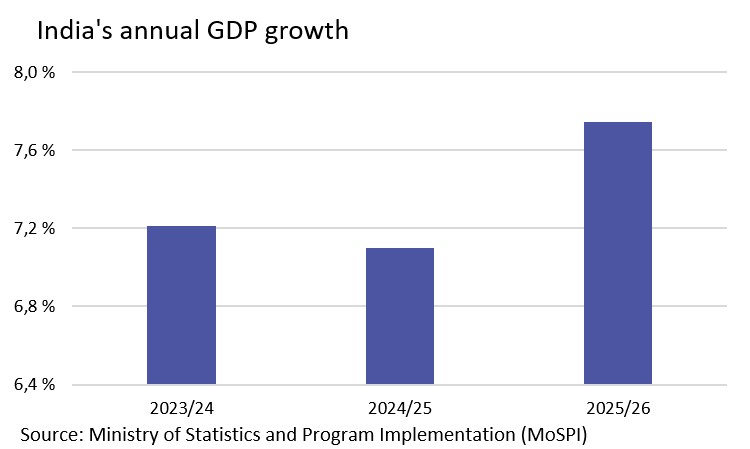
On the demand side, growth in private consumption (7.7 %) and fixed investment (8.2%) accelerated by nearly two percentage points. Growth in private consumption was supported by last autumn’s goods and services tax reform, which has encouraged households to purchase durable goods. The government promotes in various ways investments in public infrastructure. Export and import growth remained at around 6 %, which was slightly surprising given the trade wars disturbing the global economy. Devaluation of the rupee, which has a floating exchange rate, by nearly 10 % against the US dollar over the past year has insulated the Indian economy from trade shocks to some extent.
Fairly steady and rapid economic growth (6–7 %), modest inflation (3.5 % in April), stable public debt (about 83 % of GDP), and a small foreign trade deficit in the post-pandemic years are all signs that the Indian economy is on a stable footing. Economic growth is expected to remain strong during the ongoing year according to institutional forecasters such as the IMF (6.5 %) and India’s central bank, the Reserve Bank of India (6.6 %), but at a slower pace than last year. Signs of a slowdown can already be seen, for example, in the quarterly national accounts, as well as various purchasing managers indices, which have declined by a few points in recent months from peak levels last autumn.
The big news regarding the long-term growth outlook is that India’s long-awaited actions on structural reforms finally started the happen last year. The amendment to the labour laws that entered into force in November 2025 clarifies the position of employees and thus promotes the functioning of the labour market. Trade policy is also subject to major changes, as India, known for its protectionism, has agreed to significant tariff reductions with many of its trading partners. For example, the agreement reached with the EU at the beginning of the year removes tariffs on almost all trade between India and the EU. The elimination of tariff barriers exposes Indian industrial firms to direct competition with international firms, thereby forcing them to become more efficient and productive. A significant economic policy challenge for India in coming years will be finding ways to adjust to the new increased-competition environment in ways that do not jeopardise the stability of the national economy.