BOFIT Weekly Review 6/2026
Growth in household incomes kept pace with overall economic growth last year
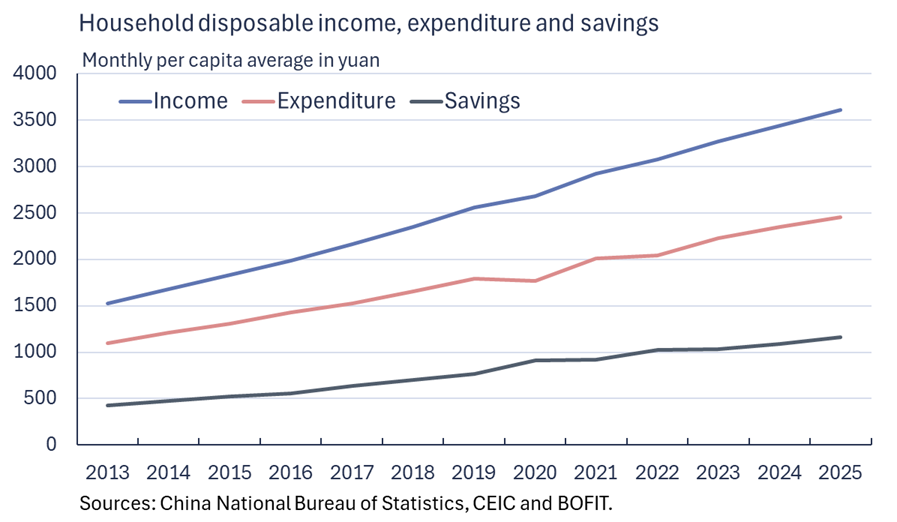
China’s National Bureau of Statistics (NBS) reports that disposable household incomes grew on average last year by 5.0 % y-o-y. With inflation around zero, the nominal and real increases in wages were the same. China has long sought to at least match income growth to GDP growth. The latest figures indicate that China continued to achieve this goal last year. Average monthly per capita disposable income was slightly above 3,600 yuan (445 euros). The median income was lower at 3,000 yuan (370 euros). The breakdown of average disposable household income consisted of 56 % wage earnings, 8 % capital income, 17 % income from business activities and 19 % from income transfers. In Shanghai and Beijing, average household incomes were more than twice the national average. Average rural incomes last year corresponded to 43 % of the average urban income. The difference between rural and urban income levels has slowly narrowed as rural incomes have grown faster than urban incomes.
The latest NBS wage data from 2024 show that the monthly average wage (includes bonuses and other additional compensation) was 8,540 yuan (about 1,100 euros). The highest average wage was in the IT sector (19,500 yuan or 2,500 euros). The average wage in the financial sector is known also to be high, but specific wage information is unavailable. The lowest monthly average wages were found in the accommodation and catering sector (4,830 yuan, 620 euros). The average wages paid by foreign firms and state-owned enterprises were also higher than the average paid by other employers. China’s official wage figures do not cover all wage earners as they omit employees of township and village-level firms. The wages of such workers are likely below average.
Even if official figures show a relatively rapid rise in incomes, consumption growth has not been particularly robust as Chinese households continue to direct an even larger share of their income going to savings than before the Covid-19 pandemic. Household confidence in the economy was seriously shaken by the pandemic. The NBS consumer confidence index showed a slight strengthening last year, although confidence was still far from pre-pandemic levels. On the other hand, the People’s Bank of China’s depositor survey do not indicate any signs of a strengthening trend.